Overview of Xuzhou
Xuzhou was known as Pengcheng in ancient times and was one of the nine states in ancient China. It has a civilization dating back more than 5,000 years and a city history of over 2,600 years. With a total area of 11,765 square kilometers, Xuzhou Municipality has a registered population of about 9 million and jurisdiction over 2 county-level cities (Xinyi and Pizhou), 3 counties (Feng, Pei, Suining), 5 districts (Yunlong, Gulou, Quanshan, Tongshan, Jiawang), Xuzhou Economic and Technological Development Zone, Xuzhou National High-tech Industrial Development Zone, and Xuzhou Huaihai International Port Affair Area. In recent years, Xuzhou has successively ranked as the National Environmental Protection Model City, National Forest City, National Health City, and National Ecological Garden City. It has been awarded as the National Civilized City and one of China’s Safest Cities for several consecutive years. Besides, it also garnered the UN Habitat Scroll of Honour Award, and ranked among the happiest cities in China three times.
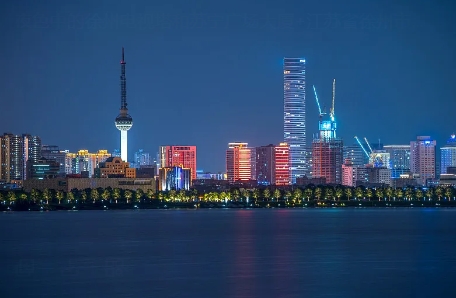
photo/vcg
Xuzhou is a national famous historical and cultural city. Xuzhou boasts a profound history and rich culture heritage with numerous historical sites. It is "Master Peng Zu's vassal state, Emperor Liu Bang's hometown, General Xiang Yu's old capita", and a must-visit city for Han Dynasty culture. The "Three Wonders of the Han Dynasty", namely, Han Tombs, Han Stone Relief Carvings and Han Clay Figurines of Terracotta Warriors and Horses, attract visitors from home and abroad. A large number of Han terracotta warriors and horses have been unearthed in Xuzhou. Unlike the realistic style of Qin terracotta warriors and horses in Xi'an, the Han terracotta warriors and horses in Xuzhou focused more on the expressions and inner emotions of soldiers in the Han Dynasty through freehand techniques. Thousands of Han terracotta warriors and horses, the mighty and majestic army of the Han Dynasty, have traveled through the time and space to recreate the history. In addition to cultural monuments of the Han Dynasty, Xuzhou is also home to other historic relics including Xiang Yu's "Horse Training Platform", Liu Bang's "Great Wind Song Stele", Su Shi's "Crane Releasing Pavilion", the "Dashi Buddha" of the Northern Wei Dynasty, the "Swallow Tower" of the Tang Dynasty, and the "city under the city" remains of the Ming and Qing Dynasties, giving this ancient city a unique cultural character.
Xuzhou is an important comprehensive transportation hub in China. Located in the juncture area of four provinces of Jiangsu, Shandong, Henan, and Anhui, it enjoys the strategic geographic advantages of connecting east and west, north and south, two-way opening, and shifting industrial layout. It is one of the four megacities and one of the core cities of the three major metropolitan areas in Jiangsu Province. It has always been known as the "gateway to five provinces" and an important transportation hub in China. A modern three-dimensional transportation system of five means of railways, aviation, highways, waterways and pipelines has been developed in the city. The national high-speed railways and conventional railways form a "double crossroads" in Xuzhou, and another crossroads of four high-speed railway lines is also taking shape. Xuzhou Guanyin International Airport is a national first-class air port with 36 international and domestic flight routes, including direct flights to Japan, South Korea, Singapore, Hong Kong, and Taiwan. Seven expressways go around the city, connecting it to all parts of the country. It boasts one of the most developed transportation networks in China.
Xuzhou is the central city of the Huaihai Economic Zone, which is one of the earliest regional economic cooperation organizations in China, involving ten cities in four provinces of Jiangsu, Shandong, Henan, and Anhui.The Huaihe River Eco-economic Belt Development Planissued by the State Council in 2018 designated the positioning of Xuzhou as a central city in the Huaihai Economic Zone. The Provincial Party Committee and the Provincial Government prioritized the construction of Xuzhou into a central city in the Huaihai Economic Zone as an integral part of the province's "1+3" key functional zone strategy, and has issued specific supporting policies. At the end of 2018, city officials from the ten cities in the Huaihai Economic Zone gathered in Xuzhou again to sign the declaration for coordinated development, and proposed to join hands in blazing a new path of transformation and revitalization.
Xuzhou is a growing city with rapid development. Xuzhou is experiencing accelerating industrialization and urbanization with vast future potential. Its main indicators for high-quality development are in the top rank of the province, and it ranks first in the province's comprehensive evaluation of high-quality development. As an old industrial base and a resource-based city, Xuzhou has been focusing on the revitalization of the old industrial base and the construction of the central city in the Huaihai Economic Zone, made every effort to promote transformation in industry, urban development, ecology and society and has navigated a course of revitalization and transformation with Xuzhou characteristics.
History of Xuzhou
Xuzhou boasts a long history. Human habitation began here more than 6,000 years ago. At the end of primitive society, Emperor Yao designated the present-day urban Xuzhou to be the vassal state of Master Peng Zu, as the Great Peng State and Xuzhou has since been known as Pengcheng. During the Spring and Autumn Period (approximately 771 until 476 BC) and the Warring States Period (475 to 221 BC), Pengcheng was occupied by the Song State and later by Chu State. After the unification of the States in the Qin Dynasty, Pengcheng County was instituted.
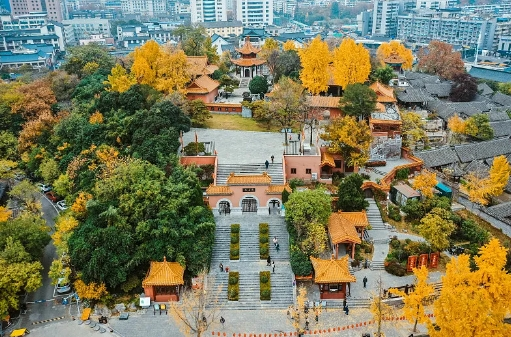
During the Chu-Han Civil War, Xiang Yu, the overlord of Chu established the capital of Pengcheng.
photo/vcg
In Western Han Dynasty, Pengcheng County was established at present-day Xuzhou, while in the Eastern Han Dynasty, the Pengcheng Vassal State was set up with Pengcheng as its capital. In the Eastern Han Dynasty, Xuzhou became the name of a province state, having jurisdiction over five prefectures and states, and sixty-two counties with its government seat in Tan County, in today's Tancheng County, Shandong Province. At the end of the Han Dynasty, the government seat was relocated to Xiapi, in present-day east part of Pizhou, Jiangsu Province.
During the Three Kingdoms period, Kingdom of Wei moved its government to Pengcheng, today's Xuzhou of Jiangsu Province. Its jurisdiction covered the area north of the Yangtze River in today's Jiangsu to southern Shandong Province. Later Cao Cao moved the Xuzhou Prefectural Governor's Department to Pengcheng, which has since then been called Xuzhou.
During the Wei, Jin, Southern and Northern Dynasties, Pengcheng State or Xuzhou had been established, with their capitals or government seats in Pengcheng most of the time.
Xuzhou was first established in the Sui Dynasty, and later changed to Pengcheng County, ruling over Pengcheng.
In the early Tang Dynasty, the names of Xuzhou and Pengcheng County were adopted alternatively, and Xuzhou served as the seat of local provincial governor in the middle and late stages of the Tang Dynasty. During the Five Dynasties period, Xuzhou State was established in each dynasty, with jurisdiction over Pengcheng and seven counties.
Xuzhou State was established in both Song and Yuan dynasties, with frequent changes to its jurisdiction.
In the early Ming Dynasty, Xuzhou was once under the direct jurisdiction of the central government and later handed over to Nanjing government.
In the early Qing Dynasty, Xuzhou was once a prefecture under the jurisdiction of Jiangnan Province and Jiangsu Province successively. In the late period of Emperor Yongzheng's rule, Xuzhou was upgraded to be Xuzhou State, governing over one prefecture and seven counties.
At the beginning of the Republic of China, states were abolished. The former government site of Xuzhou was affiliated to Tongshan County. Later, Xuhai Precfecture was established with its government in Tongshan (Xuzhou).
During the Japanese puppet regime, Xuzhou was once the capital of Huaihai Province.
After the victory of the Chinese People's War of Resistance against Japanese Aggression, Xuzhou City was administered by Jiangsu Province under the Nationalist Government. In 1949, Xuzhou City was temporarily administered by Shandong Province, since Jiangsu Province had not yet been completely recovered.
Xuzhou City was under the direct jurisdiction of Shandong Province in 1949, while Xinhailian City was under the jurisdiction of Shandong Luzhongnan Administrative Office. In November 1952, the central government decided to establish Jiangsu as a province in January 1953 and set up Xuzhou Prefecture. Xuzhou City was officially placed under the jurisdiction of Jiangsu Province, and Xinhailian City was incorporated into Xuzhou Prefecture. The government office of the Prefecture is based in Xuzhou. In 1958, the two cities of Xuzhou and Xinhailian, previously administered by Jiangsu province, were placed under the jurisdiction of Xuzhou Prefecture. Xuzhou Prefecture had jurisdiction over two cities and eight counties. In 1960, Tongshan County was placed under the jurisdiction of Xuzhou City. In 1961, Xinhailian City was renamed Lianyungang City. In 1962, the two cities of Xuzhou and Lianyungang were placed under the administration of Jiangsu Province. Tongshan County, previously administered by Xuzhou City, was incorporated into Xuzhou Prefecture. In 1970, Xuzhou Prefecture was renamed Xuzhou Region with its government seat in Xuzhou City and jurisdiction over eight counties of Fengxian, Peixian, Ganyu, Donghai, Xinyi, Pixian, Suining, and Tongshan.