Overview of Suzhou
History & Culture of Suzhou
Photo/VCG
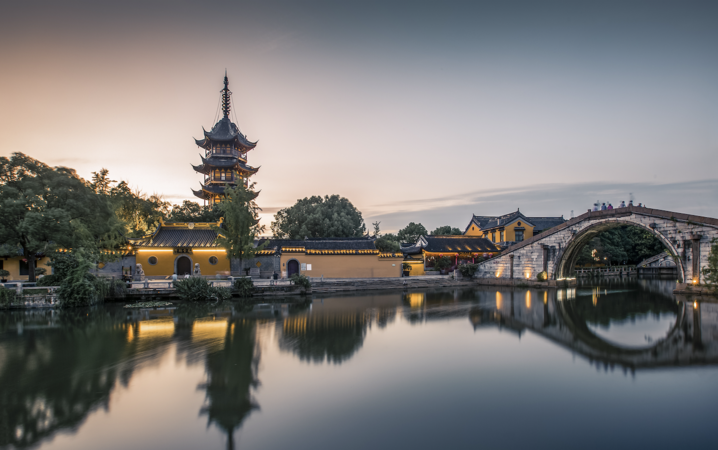
Suzhou is among the first batch of Chinese cities officially titled "national historical and cultural city" and a key scenic touristic city. The history traces its beginning over 2,500 years ago. The city is located on the same site as in the Spring and Autumn period, where He Lv, the king of Wu State had the city built in AD514. Streets and buildings were built alongside both sides of the rivers, the layout of the city looks like a double chessboard, which has been preserved till today. The river network of Suzhou has a "one ring circling three horizontal and vertical rivers" pattern. Bridges crossing rivers, buildings with white walls and black tiles, famous gardens full of historical traces, all of which together give Suzhou a unique, picturesque view.
9 Classical Gardens of Suzhou and the Suzhou section of the Grand Canal are listed into the Directory of World Cultural Heritage Sites. Seven Items including the Chinese Kunqu Opera, Chinese Guqin art, Song Brocade, Suzhou tapestry method, traditional architecture construction expertise as called Xiangshan School; and the Suzhou Dragon Boat Festival customs and Biluochun tea production techniques are included into the representative list of the UN Directory of Intangible Cultural Heritage.
In history, Suzhou had many generations of gifted people and elites. The 51 civil and military principal Scholars in history and according to incomplete statistics, 139 academicians of the Chinese Academy of Sciences and Chinese Academy of Engineering coming from Suzhou earned the city nickname of "Home to the Principal Scholars" and "Hometown of Academicians". Since 2020, July 10th has been designated as Suzhou Scientists Day.
Urban Development & Public Sector of Suzhou
Photo/VCG

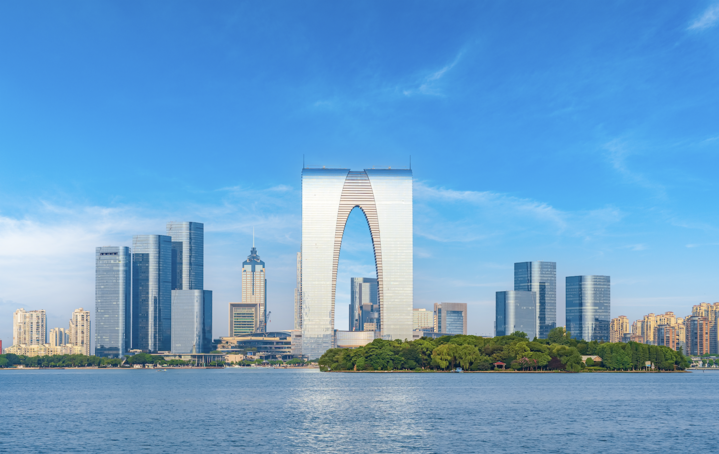
70.59 billion yuan was spent on infrastructure in 2022, an increase of 10.1% over the previous year.
Suzhou completed the sponge city covering an area of 45.97 square kilometers. The city earned designation as a national pilot city for intelligent construction. It continues to promote the high-quality "Dual Gigabit" network construction. At the end of the year, the MAN exit bandwidth was 21.7TB/s. A total of 38,619 5G base stations had been built in an accumulative manner.
By the end of 2022, the total mileage of road reached 11,472.5 kilometers. The total operation line of urban rail transit (trams included) amounted to 254.2 kilometers and the operation mileage totaled 30,521,400 train kilometers. The total line and network passenger f low reached 338.57 million. The number of buses in operation in urban area reached 6,016. 184 bus routes have been newly opened, optimized and adjusted. The bus routes total 660. The number of motor vehicles in the city exceeded 5 million and the traffic health index ranked the first among similar cities.
The construction work of national railways including Nantong-Suzhou-Jiaxing-Ningbo High-speed Railway, the North Riverside High-speed Railway and the second phase of Shanghai-Suzhou-Nantong -Railway has started. The construction work of Shanghai-Suzhou-Jiaxing Intercity Railway has been initiated. Hence, the key frame of the main-line railway network with one vertical line crisscrossing three parallel horizontal lines have been officially established. The East Taihu Lake Tunnel, Suzhou Bay Tunnel, and Yangcheng Lake Xingji Tunnel started construction simultaneously. The north extension of the Central Ring West Line, the Suzhou East Section of National Highway 312, the Dushu Lake South Tunnel, and the main line of the Jinji Lake Tunnel were completed and opened to traffic. Metro Line6, Line7 and Line8 has entered the peak stage of civil construction, Line 11 is undergoing test runs on the whole line.
The total electricity consumption amounted to 166.17 billion kilowatt-hours in 2022. The total water supply capacity of Suzhou reached 7,525,000 ton per day. A total of 4,271 million cubic meters of pipelined natural gas was supplied in the city. The city's domestic sewage treatment capacity reached 4,670,500 ton per day.