Private enterprise become cornerstone of China's real economy
Private economy is a driving force to promote the Chinese path to modernization and an important foundation for the country’s high-quality development. Suzhou-based Hengli Group, which tops the country’s list of 500 private manufacturing enterprises, has developed into the cornerstone of China's real economy.
In the production workshop of Hengli Group Suzhou Industrial Park, a strand of industrial silk slightly thicker than a hair can lift a weight of 1 ton. The high-performance industrial silk produced here is not only Hengli's flagship product, but also the global sales champion in the industry.
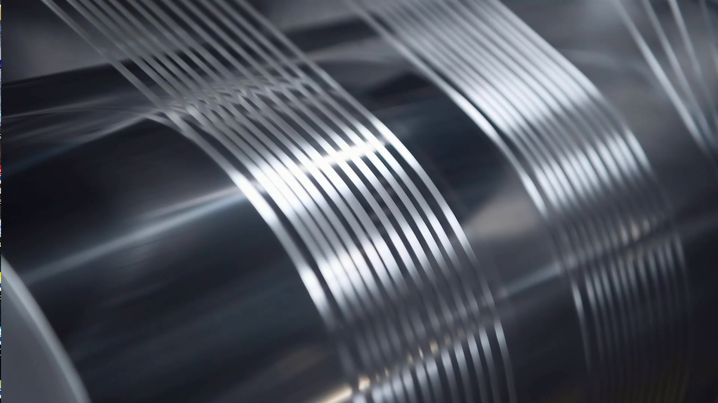
With its hardness equivalent to steel wire with ultra-high wear resistance but very light weight, industrial wire is replacing metal materials and is being applied in more and more manufacturing fields, such as bridge cables, oil and gas pipelines, and automobile manufacturing.
With excellent quality and a rich product line, Hengli has recorded a nearly 30% increase in its orders and production since the new year.
Shan Qianghung, Deputy General Manager of Jiangsu Hengli Chemical Fiber Co., Ltd., was quoted that this product is produced by Hengli and is specifically designed for car tires. Its biggest feature is its excellent stability. With the development of new energy vehicles in China, this product has been pre-ordered for five months, and their product accounts for about 30% of the global circulation and about 50% of the national circulation.
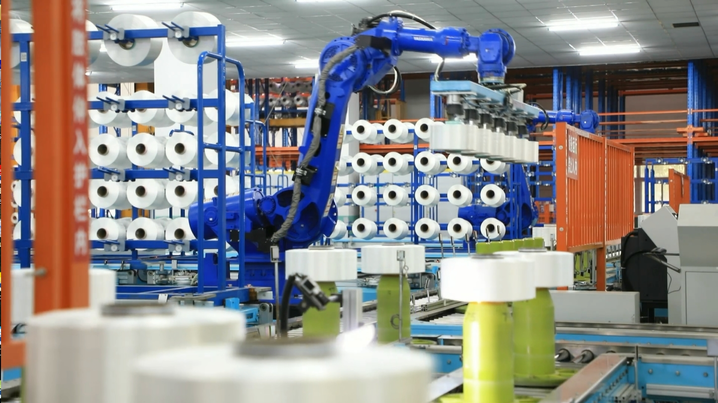
Faced with the growing market demand, Hengli has built its Suzhou Industrial Park into the most intelligent industrial silk production base in China and the world's largest production capacity by continuously building three factories in the past five years and accelerated intelligent transformation, digital upgrading, and cyber connectivity.
The application of various intelligent devices has enabled Hengli to increase per capita output by 30%, improve the rate of high-quality products by 2%, and have four of the top five intelligent workshops in the global chemical fiber industry.
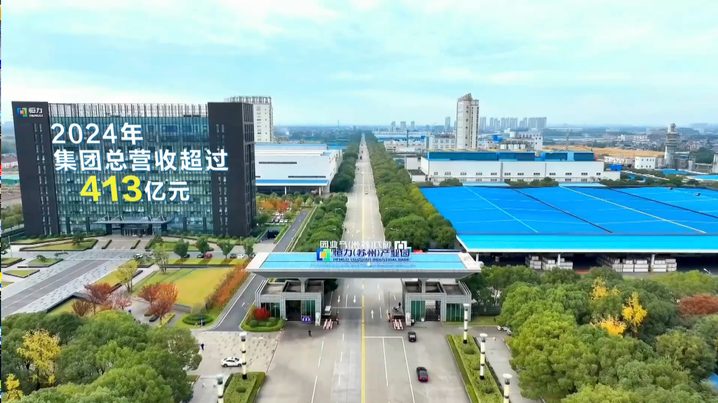
At present, Jiangsu Hengli Chemical Fiber Co., Ltd. produces 800000 tons of industrial silk annually, ranking first in both production and sales worldwide. In 2024, the group recorded a total revenue of 871.5 billion yuan, surpassing well-known enterprises such as BYD, Huawei, and SAIC Group and ranking 81st in the Fortune Global 500 and 1st in the Top 500 Private Manufacturing Enterprises in China, making it the top private firm in Jiangsu for four consecutive years.
In 2002, Hengli Group, with innovation as its breakthrough and a firm foothold in the textile industry, entered the upstream of the industry, breaking the monopoly of foreign enterprises on high-end spinning in China.
In 2010, Hengli Group entered the petrochemical PTA industry by building 20 million tons of refining and 4.5 million tons of aromatic hydrocarbon plants, helping China occupy 85% of the global industry market share.
In order to gain more international discourse power, Hengli Group has invested heavily in industry university research cooperation for many years with the proportion of research and development investment remaining between 5-6%.
Over the past 30 years, from a small textile factory on the brink of bankruptcy to a Fortune 500 enterprise group, Hengli has confirmed the vitality of China's private economy and reflected the achievements of China's reform and opening up.
Targeting national strategy and industrial needs, Hengli has accelerated its entry into industries such as new materials, new energy, and shipbuilding. It has started construction of 34 ships and launched 11 ships, with orders signed until 2028.
According to Chen Jianhua, Chairman of Hengli Group, Hengli Group will follow the General Secretary’s instructions and requirements, shoulder its responsibilities, enhance the reputation of Jiangsu's manufacturing industry through innovation and practical work, promote the high-quality development of petrochemical, fine chemical, new materials, chemical fiber, and textile industries, and push China's shipbuilding station to the forefront of the global industry so as to make more contributions to the country and the industry.