Riding the tide IV: Embodied intelligence thrives in Wuxi's Huishan through cross-regional collaboration
East China's Jiangsu Province, a powerhouse in China's economy, is spearheading the integration of tech and industrial innovation—and Wuxi's Huishan District is leading the charge. By leveraging cross-regional collaboration, the district is rapidly advancing its embodied intelligence sector. Initiatives like humanoid robot training bases and China's inaugural Embodied Intelligence Robot Games underscore the rise of embodied intelligence in the Taihu Bay region.
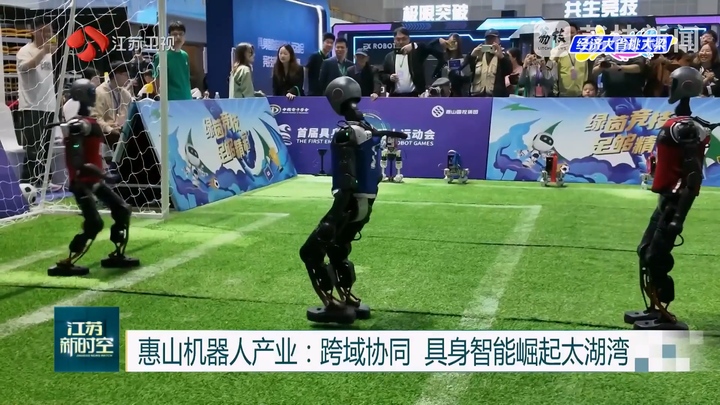
The groundbreaking Embodied Intelligent Robot Games featured soccer, basketball, and dance competitions, drawing over 100 teams from academia and industry, with 150 robots showcased.
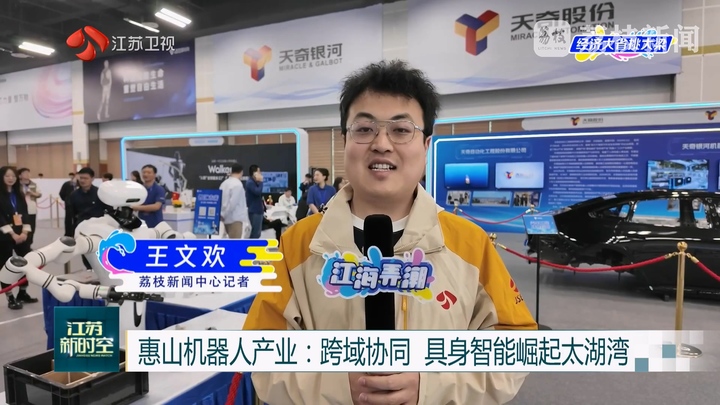
At the event's exhibition zone, Wang Wenhuan, a reporter from Litchi News, visited a local enterprise, Miracle Automation Engineering Co., Ltd. "What new technologies are you presenting here?" he asked.
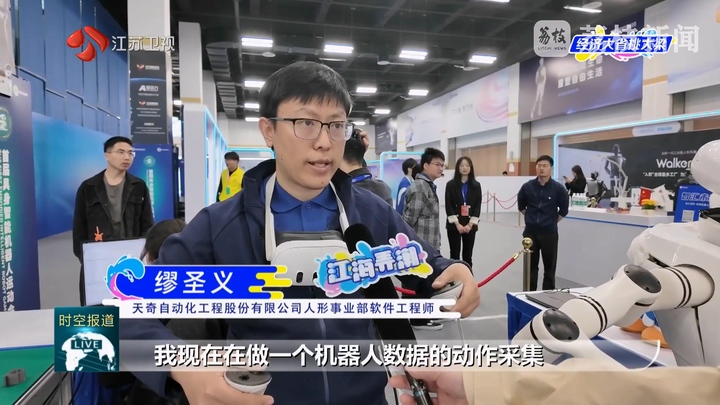
"We're translating human movements, such as grasping components, into algorithms to train other robots," Engineer Miao Shengyi, who demonstrated motion-capture technology, explained.
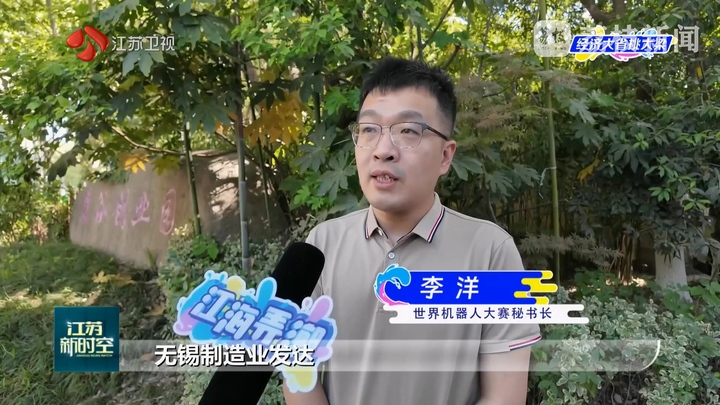
Over a dozen Wuxi-based companies participated in the games. The event's success in Huishan reflects the district's robust industrial chain. Li Yang, Secretary-General of the World Robot Contest, noted, "Wuxi's advanced manufacturing base and forward-looking policies, which prioritize humanoid robotics as a future industry cluster, provide mature upstream supply chains and downstream applications in automotive parts, high-end equipment, and electronics."
Despite Wuxi's limited academic resources, the city has consistently pioneered emerging fields from integrated circuits to embodied intelligence. Wuxi is bridging the gaps by collaborating with universities and research institutes in Beijing, Shanghai, and Shenzhen through initiatives like the "academician economy," where top scientists establish teams in Wuxi, and creating "innovation enclaves" nationwide.
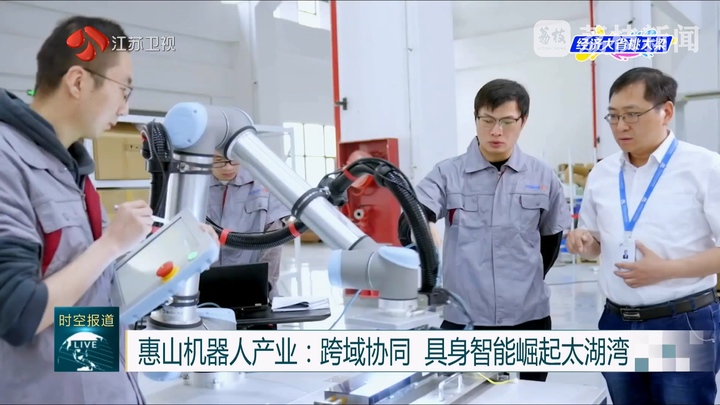
Reporter Wang Wenhuan visited the Wuxi Research Institute of Huazhong University of Science and Technology, an early fruit of the "academician economy" model. The institute's advancements in robotic motion control and intelligent perception lay the groundwork for high-level embodied intelligence. Meanwhile, Wuxi's innovation hubs, such as the Huishan-Shenzhen Innovation Center, have attracted 81 companies.
Data highlights the impact: Over the past decade, Wuxi has filed 572 patents in humanoid robotics, with a 57% invention patent grant rate—the highest in Jiangsu. The city is becoming a hub for robotics innovation.
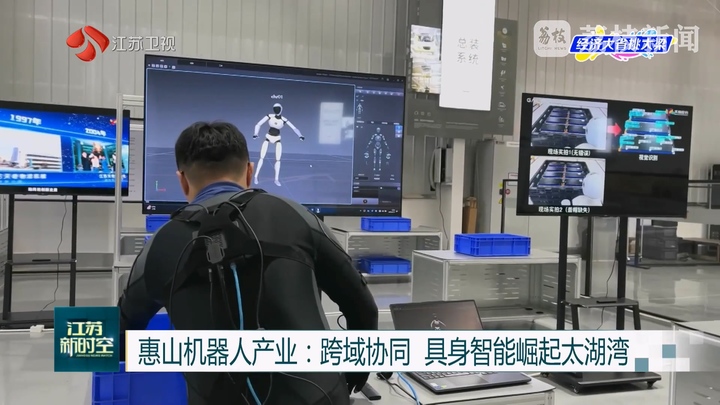
Looking ahead, where is Wuxi's embodied intelligence industry headed? At Miracle Automation Engineering Co., Ltd., Wang Wenhuan saw humanoid robots undergo on-site training. These robots will eventually start working in factories.
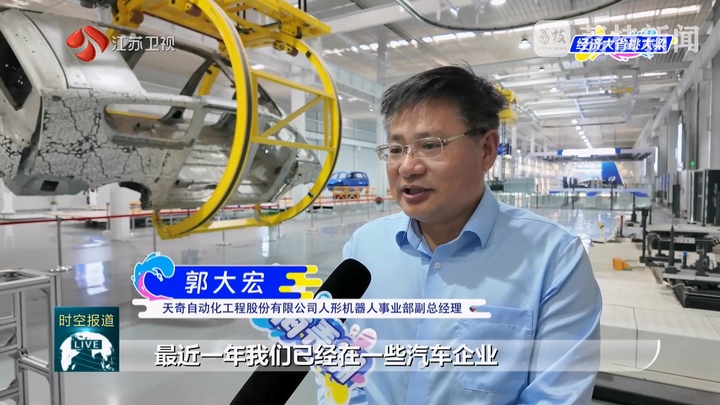
Guo Dahong, the company's deputy general manager, said, "We've piloted applications in automotive manufacturing and aim to empower the manufacturing upgrades in scenarios such as automobiles, components, traditional machinery manufacturing, and new energy."
To scale the industry "from 1 to N", Wuxi is accelerating the construction of an industrial chain. The Wuxi (Huishan) Humanoid Robot Industrial Park is one of the important carriers.
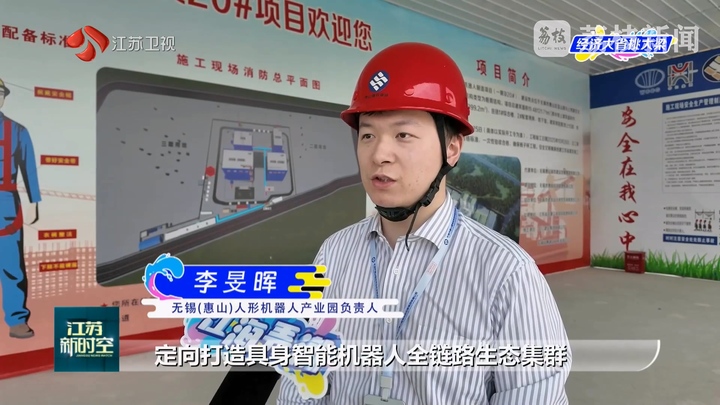
Li Minhui, the park's director, shared, "We've signed projects like RoBoCT Technology's exoskeleton production base and the Shenzhen Institute of AI and Robotics, forming a full-chain ecosystem."
Jiangsu's 2025 major projects list includes Wuxi's AI robotics initiative, targeting annual production of 30,000 controllers and robots. Wuxi also recently unveiled a three-year plan to grow its humanoid robotics industry to over ¥30 billion, 200 companies, and 300 application scenarios by 2027.
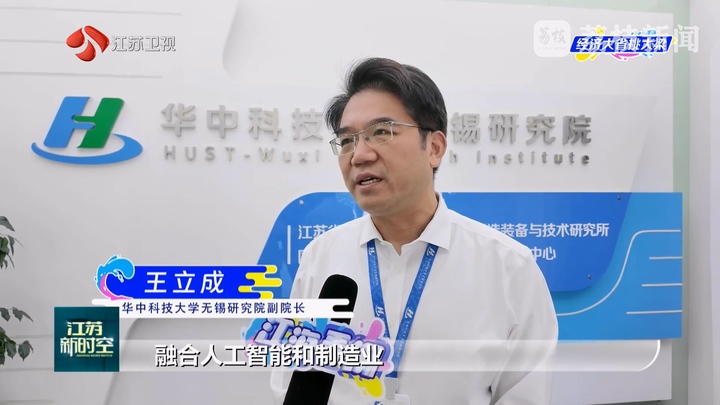
Wang Licheng, deputy director of the Wuxi Research Institute of Huazhong University of Science and Technology, emphasized integrating AI with manufacturing: "We're developing intelligent industrial robots, intelligent inspection equipment, and industrial AI solutions to assist in intelligent transformation, digital transformation, networking, and integration. We also develop some high-end intelligent equipment for specific scenarios, for example, the integrated circuit industry, biomedicine, and new energy vehicles, and jointly develop the implementation of these future technologies with enterprises."
[Notes]
At the Embodied Intelligent Robot Games, Wuxi's ambition was clear. By reshaping innovation through the "academician economy" and "innovation enclave" models, the city is pooling expertise from Beijing's algorithms, Shenzhen's hardware, and Xi'an Jiaotong University's robotics. While resources may set the starting point, Wuxi proves that innovative strategies define the finish line.